A couple nights ago, I laid awake in bed at about 3:00 AM. I’m not sure why, but I woke up in the middle of the night thinking about second chances. Sometimes they come after a colossal failure or near-death experience. Other times it may just come as new career opportunity, financial windfall, or even a new relationship. The fact is, we have all likely experienced many second chances in our lifetime. Even as I write this introduction, I’m both struck and convicted by this question rattling around in my feeble brain, “What are you doing with your second chances?”
The human mind is so fickle. We can be ecstatic about a new job opportunity and then six months later already be updating the resume looking for something new. The relationship that consumes your every thought and desire can quickly become “an ol’ ball and chain”, breeding animosity and resentment toward one another. We so quickly forget and take for granted the opportunities we are given, tossing them to the side while we look to something or someone else to fill the hole. In the same way, we throw away the second chances we are given at life. Our lights gets snuffed out in dull apathy and disregard for the miracles we’ve experienced and we go about life “near-sighted and blind”, forgetting where we came from and having no idea where we’re going.
What second chance are you living in right now? Are you really living it to the fullest? Are you taking advantage or taking for granted? If the latter is true for you as it can often be for me, take some time to consider the miracles you’ve seen in your life. Give some thought to the opportunities you’ve been given and the relationships that have blessed your life. Grab onto the gift of those second chances and treasure them. Live the life that your soul truly longs for, fully alive to the goodness and grace that has been given to you, and take advantage of the opportunity.
So, what are you going to do with your second chance?
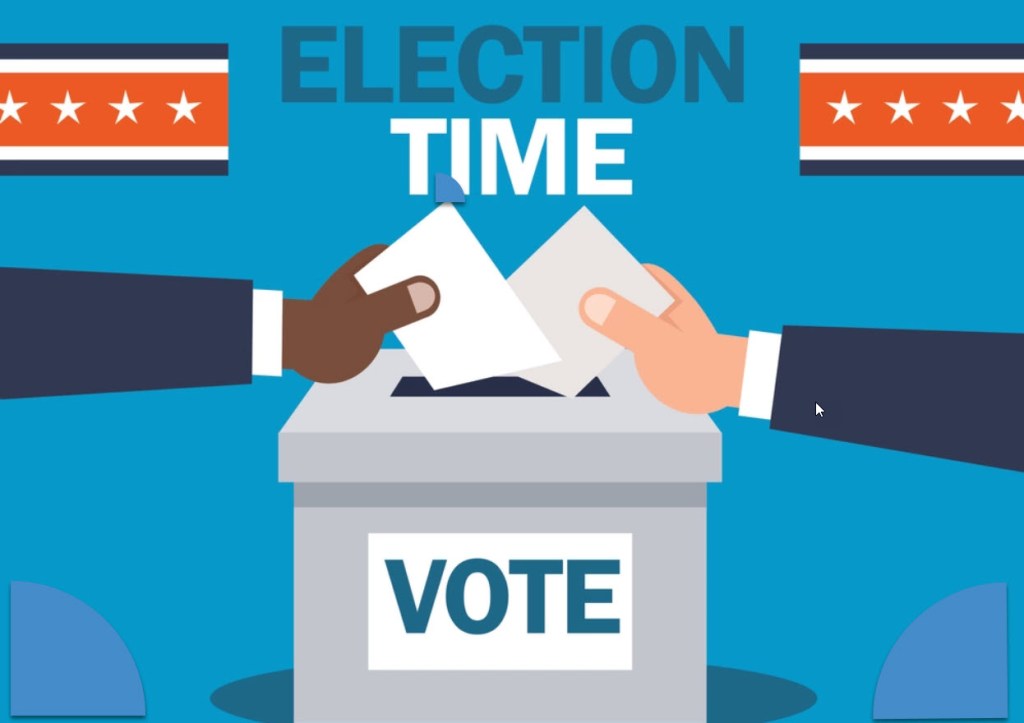
Vote for whoever you want. We can still be friends.
One of my favorite things about living in the tiny, historic town of Jacksonville, Oregon is the annual Britt Music and Arts Festival. Every year, a variety of musical legends plays the outdoor venue on the western hill of our little town. Over the years, Diana Ross, Willie Nelson, The Beach Boys, Gladys Knight, along with many other generational talents and up-and-coming musicians have played the evening stage up on the hill. One of my favorites every festival season is Michael Franti and Spearhead. I’m not sure how long he’s been playing here, but at least for the last several years he’s been on the docket every summer. His music and his shows bring an infectious level of joy and hope for humanity, as the lyrics are often a call to love and support one another through the craziness of life.
Why does everybody in the world seem so divided? Why does everybody gotta hate each other, who decided? – Michael Franti
Why does everybody in the world seem so divided? There have always been divisions between religions and philosophies, races and socioeconomic factions. But it seems to be ramping up exponentially, especially when social media gives us the ability to spread a hateful message without any real personal cost or consequence. Not to mention the misinformation that gets disseminated at the click of a button. At this rate, we are spiraling into divided chaos, and may actually be circling the drain. However, before you (or I) point a finger at one side or one party, we should be honest and admit that it’s coming from both sides. Republicans and Democrats alike are both screaming the same alarmist and catastrophizing message: “If (they) win this election, it will be the end of democracy in America”.
The fact is, nobody wins when this is our approach to freedom of thought in a democratic republic. The constant attack and distrust between political parties is akin to a game of tug-of-war, both sides pulling to gain an inch in one election only to give up two inches in the next. Back and forth, round and round we go, only to find ourselves digging in deeper for our chosen party and we’re all ending up in the mud. But is there a better way? What if we focused more on the good that “our” candidate was doing rather than throwing shade on “their” candidate. What if we chose to actually give each other the space to have different opinions and views without having our fragile egos shattered because someone doesn’t agree with us? And what if we all take a couple moments to verify the truthfulness of something before we repeat it so we aren’t contributing to the confusion? What if we said, “Vote for whoever you want and we can still be friends. I’ll vote for whoever I want, and we’re still going to love and respect each other.”? Can we do that? It seems like such a radical shift from where we’re at, and yet I think it’s actually very achievable if we all just take a breath, drop our stones, and filter our words and actions through the call for us to love one another.
Love and Hate are on the ballot every day in the way we treat our neighbors, coworkers, and even the random people online that you may never know. Your vote counts. My vote counts. In a world full of voices shouting for their position and opinion, I hope love breaks through and becomes the prominent voice that brings peace in our homes, communities, and around the world.
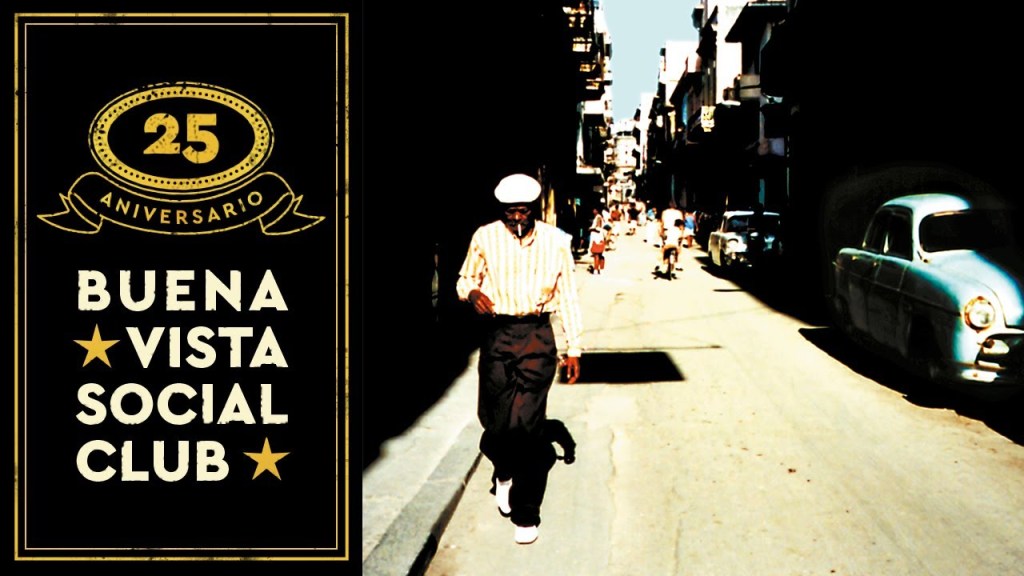
A couple years ago, I scored a great birthday present from my wife. She knows how much I love music so she bought me a record player and a couple of records she thought I would like. One of them is Buena Vista Social Club. I had never actually listened to them before, but from the moment that needle dropped for the first time, I was hooked. The sounds of Cuba come to life with the piano, horns, drums, and guitar. The vocals of Ibrahim Ferrer, Compay Segundo, and Omara Portuondo grace the album with such nostalgic class and style that my copy of vinyl found itself on repeat daily. I realized recently that is probably how my blog feels sometimes, like love on repeat. It seems that whatever subject I’m thinking about at the time, somehow it always comes back around to this trio: Love God, Love your neighbor, and Love yourself.
As much as this may sound like a scratched record constantly skipping back to the same tired lyrics, I can’t help but look around and see that the message of love is needed now more than ever. So what exactly does a message of love sound like? What should it look like? How is a message of love supposed to make people feel and what should it motivate me to do? Much of the evangelical world right now is enamored with a message of power and prosperity, success and superiority. So is that what the intent of the gospel is, for us to prosper financially, to have the most powerful military, or to be the “greatest” nation on earth? Or have we lost sight of loving our neighbor? Have we forgotten that the last shall be first? Are we missing the point of welcoming the foreigner, turning the other cheek, and even loving our enemies? I’m not pointing a finger at anyone in particular here, but I do think it’s worth a moment to consider which kingdom we are serving.
Believe me, I have concerns about the mixture of faith and nationalism. I see the rhetoric on both sides of the fence, and it’s hurtful, dehumanizing, and causing relentless stress and anxiety in so many people. I just don’t think it has to be this way. Can we disagree without villainizing each other? Can we debate and not attack someone’s character or intelligence simply because we have different beliefs, backgrounds, and viewpoints? An assassination attempt is not the cause of division, but the result of so much hate-speech, catastrophizing, and fear tactics. Let’s all just take a breath. Someone is going to be our new president in November. You might like him or her, and you might not. But please, with all due respect, for the love of God, and for the God who IS love, let’s put love on repeat. Let our speech be full of love. Respect each other in love. Be truthful in love and even disagree in love. That is how our nation is going to be ok. Not based on which party wins an election, but we the people choosing to relentlessly love one another. Peace and love to you all.
It’s hard to call myself a writer. I don’t know why exactly. I guess something in me feels inadequate, like a poser trying to be something I’m not. At least, that’s what the voice in my head likes to tell me. It’s amazing how sometimes the words we speak to ourselves cut the deepest and take the longest to heal. Consider where those words come from though. Are we born with an innate sense of failure? Were we created to live in constant fear that we are either too much or not enough? Not good enough, smart enough, thin enough, or pretty enough? Too loud, too quiet, too passionate, too lazy? We all have a different story, so I don’t want to generalize this too much, but I think it’s quite common that the internal voices of self-doubt are simply parroting what we’ve heard spoken to us. In short, whether hearing these degrading voices from within or without, the fact is that words are powerful. They tend to reverberate in our soul as a means to either build us up or tear us down. The bible goes so far as to say that the power of life and death is in the tongue. Words matter. What we say to ourselves and to others matters. It’s actually a matter of life and death.
So I ask myself and I ask you, “what kind of words are you speaking, both to yourself and to others?” We live in a greatly divided society driven by “information” that is curated for us based on our own biases. We typically surround ourselves with people who are generally similar to us; same interests, socio-economic status, affiliations, etc. It’s no wonder that it becomes so easy for us to dehumanize those on the other side of issues and begin to use divisive and hurtful language toward each other. It doesn’t really even appear to matter what the issue is. You see it in everything from politics and religion to sports and fashion. We’re right, they’re wrong. I’m informed, you’re ignorant. We are sophisticated, they are simple. We belong, they don’t. If we can take a step back for a moment and consider the way we view and talk about other people, my suspicion is that we would find that it’s really quite ugly and hurtful. In this, we need to do better. We need to stop viewing everyone as enemies just because they may disagree with us on one issue or another. So, how can we do that?
This brings me to the second part of the question, which is, what kind of words are you speaking to yourself? I think that often the reason we attack others is because we feel insecure in ourselves, or we feel anxious and fearful about their position that we disagree with. If I spend my energy speaking positively to myself, I wonder what kind of an impact that would have on how I view and speak to others. If I feel confident in my worth as a human, would I be so dogmatic to try to prove the value of my opinions? If I speak words of love and compassion into my own soul, do you think maybe I’d have more love and compassion to give out? Again, I don’t want to oversimplify the self-preserving nature of the human psyche. However, when I feel safe, I can provide safety to others. If I feel loved, it’s easier to love. When I am given the freedom to have my own thoughts and opinions, I can also give others space to have theirs as well. We don’t have to agree on everything. We have autonomy as humans to think, to learn, and to grow, and it’s our responsibility to do that with love, gratitude, and wisdom. In the same way, we have a responsibility to speak as well, not in divisive criticism, but in love. Not out of selfish motive, but with gratitude. And not in foolishness, but with wisdom.
I hope I’m growing in this, as I am definitely a work in progress. But the more I remind myself that I am loved, the easier it is to love. So, I’m ok with who I am. I’m content and confident to just be me, and let you be you. And hopefully we can remember that we’re all in this together, so let’s speak words of peace and healing to ourselves and each other. One love can make a difference. One voice can ,change a life. How will we choose to use our words today?
Junior year of high school, I had a tendency to accidentally miss class periodically. I’m not really sure how it would happen, but inevitably somehow nearly every day something “came up” that got in the way of my class schedule and, well, decisions had to be made. Given that I already felt like I was completely fluent in English, it seemed that English class was a bit superfluous so it usually didn’t make the cut of classes I would attend for the day. My English teacher that year was an eccentric, somewhat older lady named Mrs. Wisecarver. Well, that was her official teacher name, but to me she was just Marge. While she on the other hand always addressed me as Mr. McDonald. Basically, I showed her no respect and she chose to show me respect I didn’t deserve. For a punk, high-school kid it was a pretty good arrangement.
When someone asks you your name, what do you say? Is it complicated? “Well, when I was kid my parents called me ________, but now I go by ________, and my friends call me ________.” It should be a pretty simple question, but for many (myself included), it’s actually not a simple answer. In many ways, our name is tied to our identity and that can get complicated. Identity seems to have two parts. There is the identity that we are known by, and more importantly there is the identity by which we know ourselves. The struggle we all face is to really know and accept our true identity, and then to make that identity congruent with how we are known and perceived in our family and social circles. For the sake of pursuing authenticity, I’m ignoring the whole question of our “social media identity” that is often a presentation of a false identity that we wish we had, but simply isn’t true or even a realistic desire, but that’s for a different conversation. Today, I just want to ask you, what is your name? In other words, what is your identity?
We see several examples in the bible of people being given a new name. Saul became Paul, Simon is called Peter, Abraham started out as Abram, Jacob was later named Israel, and the list goes on. Benjamin, Sarah, Levi, and Esther…..all on the list of name-changers. So, perhaps the better question to ask is not, “who are you?”, but, “who does God say that you are?” That is where our truer identity is found. Your story may be one of rejection, but God says, “I accept you as you are.” Your past may be riddled with failure and shame, but your true identity tells a story of redemption. I’ve wrestled with wanting to change my name as part of trying to define the identity that I’ve discovered to be true in me. And yet, what’s in a name? Juliet says a rose by any other name would smell as sweet. Clearly I don’t have all this figured out and the answers to these questions of identity are complex and nuanced, but I do know this….my truest self and identity are defined not by how I feel or what people say, or even what I’ve done, but the creator defines the creation.
If you happen to be like me, posing deep questions to your soul about who you are, consider good ol’ Marge. The way she addressed me as Mr. McDonald didn’t mean I had earned that title, but she saw that as my deeper identity that I hadn’t even grasped yet. I wasn’t living up to a name of respect but to her that didn’t matter. She saw me for who I was created to be, and that carried more weight than my immature and disrespectful behavior. You may have unanswered questions about your identity, but I would suggest you start with this, “God, who do you say that I am?” He may give you a new name. He may reveal something honorable and noble about your character. Maybe he just wants you to know that you are loved and accepted just as you are. The thing I’m certain of is that God knows us better than we know ourselves. There is room for you to grow, to change, to develop into your truest self and become all that you were created to be. And in all of this questioning, searching, and struggle, I hope you know you are truly loved in whatever stage of your journey you happen to be in.

 One Love One Voice