Learning and Unlearning

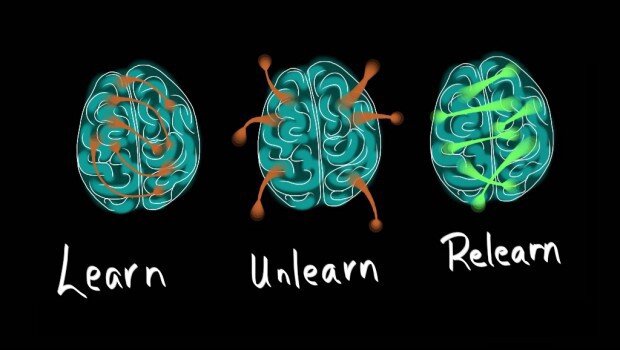
Being wrong can be humiliating…..or, it can just be human. It seems to depend on how important it is for you to be right. Learning something new feels empowering. A new skill or hobby, new insight into your soul or psyche, or new understanding of the world and culture around us. It feels good to learn, so why is it so difficult and painful to unlearn something? The things we thought we knew but somehow discovered there were holes in our knowledge that made our arguments crumble under the weight of truth. Perhaps you’ve even experienced this painful unlearning in the deepest foundations of your life. Have you experienced an identity crisis, questioning who you are and the purpose of your life? I have. Have you deconstructed your faith, searching for what really resonates as truth? I have. Have you foolishly argued your points only to find out later that your sources were biased and you only knew half the story? Yup, I’ve done that, too. Why is it so difficult to admit when we’re wrong about something? I think the answer lies somewhere deep in our depraved brain that associates this with weakness. Maybe it’s pride? Might be fear? Could just be plain arrogance. There should be great freedom in letting go of false assumptions, but it seems to be universally difficult. I don’t think it needs to be.

Our first step toward being right is the humility to admit you were wrong. Recently we saw a prime example of this in the news. Well, actually it was everywhere. In the news, plastered in Social Media feeds, in both public and private conversations. Worldwide, it was everywhere. It was the story of Imane Khelif. To refresh your memory, she is the Algerian boxer who won a gold medal in the Paris Olympics this past summer. Yes, I said “she”, because she is a she and she’s never been a he. However, due to her own genetic anomalies, there was great debate about whether she should be allowed to box against other women. As somewhat of a feminist at heart, I understand the argument against having men compete against women, and I agree it’s not fair. Women have been oppressed and held back for generations, the last thing they need now is to have men co-opting women’s sports or anything else. But as the hate and vitriol poured in and this girl was eviscerated by millions of people online, her story started to come to light and, what do you know, she was a she all along. Interesting though, how many social media posts did you see from friends and family publicly apologizing for being wrong about her and unfairly demonizing her? I hope you saw some, but I didn’t. Not one. I saw a lot of posts indicating “he” should get his @$$ kicked fighting against “other men”, but not one saying, “I’m sorry. I was wrong.”

Sometimes it’s something small. Recently my oldest daughter who is busy with her husband raising three amazing kids, working, going to school, and just trying to keep their heads above water discovered the simplicity of keeping a healthy protein snack available at all times. When she was at work, she would quickly pull out her small protein bar for a nutrition boost. Or being busy with school work, grab a bar to fuel her brain without taking time to make a meal. Well, she pulled one out and offered it to her cousin for a quick snack. Together they reviewed the nutrition facts to see if this would satisfy her cousin’s hunger. The result….1 gram of protein. She had been eating these daily for weeks, thinking she was reaching for a good, healthy snack. It turned out she was pretty much just eating cookies. Tasty, yes, but most certainly not a “protein bar”.

Learning and unlearning are both just part of the process of growth. It’s ok to be wrong and admit you were wrong. We all are at times. Anyone who says they’re never wrong is, well….wrong. And wrong is ok as long as we are willing to humble ourselves to admit our error, learn from our mistakes, and move on. In my life experience, I’ve had to let go of some false ideas about God. If I never admitted I was wrong, I’d still be living under the oppressive assumption that God was angry with me if I didn’t do and say everything just perfect. I’d still be hiding behind a false identity, pretending to have it all together. But the freedom came when I unlearned what I thought I knew and learned the deeper truth about God’s character and my identity.

Are there things you need to unlearn? Have you been living in a false narrative, believing and even fighting for things that may not actually even be true? If so, you’re in good company because the other 8 billion people on the planet don’t have it all together either. But good news, you don’t have to continue in it. It’s ok. You can learn or unlearn something new today about God, about yourself, about your political views, your opinion about your neighbor, preconceived assumptions about the world, or even the snacks you’re choosing to eat. What will you learn, or unlearn today?

Goodness is relative

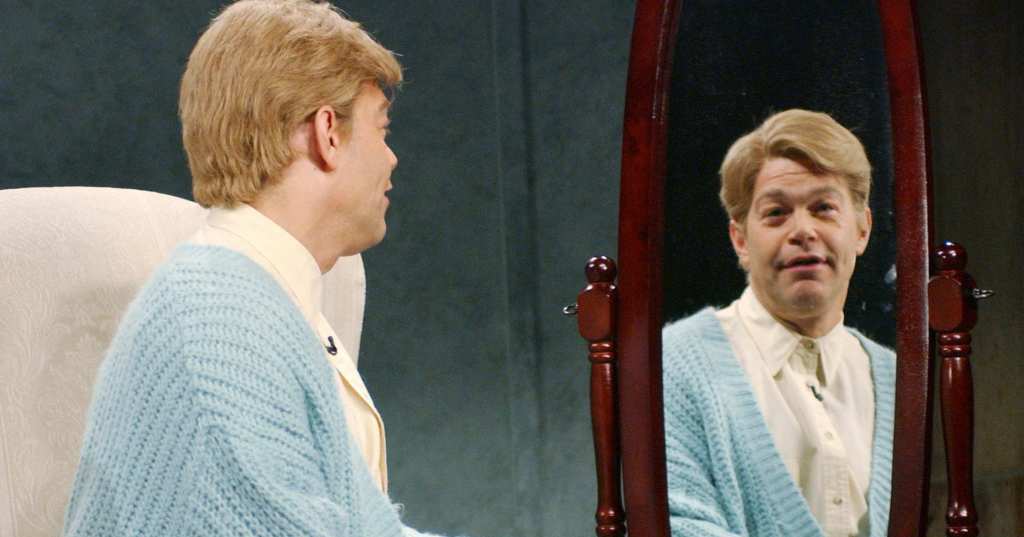
“I’m good enough, I’m smart, and doggone it, people like me.” Maybe if you grew up watching SNL like I did, you recognize this daily affirmation from Stuart Smalley. That was back in the days of Dana Carvey’s “Massive Headwound Harry”, Deep Thoughts by Jack Handey, and Chris Farley living in a van down by the river. Stuart Smalley was an interesting character, as I’m not really sure if he was supposed to be a mental health counselor or the patient. Maybe, like all of us, in some ways he was both. His signature line and personal mantra is what sticks with me, “I’m good enough, I’m smart enough, and doggone it, people like me”. It makes me think, how good is good enough? Good enough for what? Good compared to who?

Goodness, like other qualities that we judge in ourselves and in others, is relative to what it’s being put up against. You may say to your wife or friend, “That’s a pretty sweater”, but if it’s seen with a magnificent backdrop of a colorful sunset, suddenly the sweater isn’t as beautiful compared to the brilliant skyline. In a similar (but opposite) way, a love song by Adele or Ed Sheeran can be captivating, but it pales in comparison to the first time you hear the words “I love you Daddy” from your baby girl or boy. I absolutely love music and a good song can touch our hearts deeply, but still today after thirty years, the words “I love you Daddy” penetrate my soul like no song ever could. Beauty is relative. Strength is relative. Goodness is relative.

So when I boil everything down in my life, the days I was killing it and the days I blew it, the times I lived with integrity and the moments I lied to myself and others, all of it, if I’m honest I know I’m not good enough. Maybe if I compare myself to that guy or those people, I can fool myself into believing I’m good and they aren’t. But, goodness is relative, so in order to be good enough I have to compare myself with what is good, not with what is bad. Taking this a step further, when I consider the fact that “God alone is good”, well then I would have to compare myself to God rather than to my neighbor to determine whether or not I’m truly “good”. Through that lens, it becomes painfully obvious that I am in fact not good enough. And dare I say, neither are you.

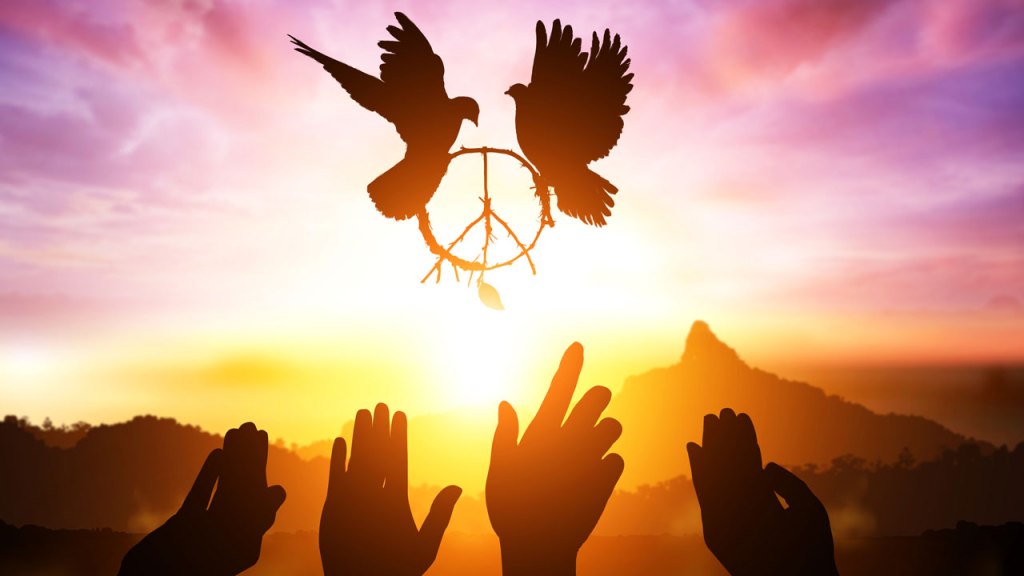
But. I love it when there is a “but”. God himself, the one who is good tells us that we are good and that we are enough. Not because of what you or I do but simply because he loved us and gave himself for us. So stop trying to be good enough. You already are. Stop striving to achieve perfection, because A) You never will, and B) You are already enough. Isn’t that crazy!?! You, me, all of us. Republicans, Democrats, and Independents. American, African, LatinX, Asian…..we’re all beautifully and wonderfully made in the image of God and declared to be enough. We can stop competing with each other trying to prove who is better, smarter, or more enlightened. Mother Teresa said, “If we have no peace, it is because we have forgotten that we belong to each other”. Rather than comparing my own goodness with those around me, I can see that we are all equal in the eyes of God. We belong to him, and we belong to each other. This is where we will find peace in the world and peace in our souls that we are all searching for. You, my friend, are loved. You are enough. You are good.

What do you….

Hans Christian Andersen said, “To travel is to live.” While I appreciate the sentiment, I would argue that there is much more to living than travel. Community is developed at home. Family and friends bring joy and fulfillment to our lives that no beach vacation or tourist experience can ever match. That being said, I absolutely love to travel. It opens my eyes to the beautiful diversity of cultures, languages, customs, and landscapes that distinguish this planet from all the other rocks floating through space. When we get out of our own small experience of life, it’s like discovering a new color of the rainbow; another piece of God’s infinite creativity on display. Unfortunately travel can be a really expensive hobby so we can’t do it often, but when we do, it’s life-changing every time.

One interesting thing we have noticed makes me stop and consider the question, “What do you do?” In my experience here in the U.S., this is the question we all ask when we meet someone. Typically after the initial pleasantries, and within the first 60 seconds of actual conversation, we ask the question, “So, what do you do?” Perhaps this is more commonly asked among men than it is with women due to some historical perspectives on the “appropriate” roles for women in society, in the home, or in the church, which is a whole other issue that deserves some consideration. Be that as it may, the question doesn’t seem to carry the same weight of importance in other parts of the world, which causes me to wonder if perhaps we’ve ascribed it too much importance in defining our identity.

What if we rethink the questions we ask each other? If we refocus our priorities a bit and, like some other cultures, we could see more of the person than the position they hold. I’m challenging myself in this because I don’t consider myself to be a great conversationalist. I quickly run out of things to talk about beyond sports, weather, and “what do you do?” However, I want to learn to connect more and invest in getting to know the person as an individual and not just tell them how the weather is. Rearranging our own priorities will also reshape the questions we ask. “What do you do?” becomes “What do you…. love to do for fun?”, “What do you… hope to share with the world?”, or “What do you…. want to learn?” There are probably hundreds of things we could ask each other if we really want to know one another. It requires a bit of an investment and a little effort, but I think it’s a good step forward in creating the type of community and belonging that we’re all searching for. So tell me, what are you learning or dreaming about?

Second Chances

A couple nights ago, I laid awake in bed at about 3:00 AM. I’m not sure why, but I woke up in the middle of the night thinking about second chances. Sometimes they come after a colossal failure or near-death experience. Other times it may just come as new career opportunity, financial windfall, or even a new relationship. The fact is, we have all likely experienced many second chances in our lifetime. Even as I write this introduction, I’m both struck and convicted by this question rattling around in my feeble brain, “What are you doing with your second chances?”

The human mind is so fickle. We can be ecstatic about a new job opportunity and then six months later already be updating the resume looking for something new. The relationship that consumes your every thought and desire can quickly become “an ol’ ball and chain”, breeding animosity and resentment toward one another. We so quickly forget and take for granted the opportunities we are given, tossing them to the side while we look to something or someone else to fill the hole. In the same way, we throw away the second chances we are given at life. Our lights gets snuffed out in dull apathy and disregard for the miracles we’ve experienced and we go about life “near-sighted and blind”, forgetting where we came from and having no idea where we’re going.

What second chance are you living in right now? Are you really living it to the fullest? Are you taking advantage or taking for granted? If the latter is true for you as it can often be for me, take some time to consider the miracles you’ve seen in your life. Give some thought to the opportunities you’ve been given and the relationships that have blessed your life. Grab onto the gift of those second chances and treasure them. Live the life that your soul truly longs for, fully alive to the goodness and grace that has been given to you, and take advantage of the opportunity.

So, what are you going to do with your second chance?

Love on the ballot

Vote for whoever you want. We can still be friends.

One of my favorite things about living in the tiny, historic town of Jacksonville, Oregon is the annual Britt Music and Arts Festival. Every year, a variety of musical legends plays the outdoor venue on the western hill of our little town. Over the years, Diana Ross, Willie Nelson, The Beach Boys, Gladys Knight, along with many other generational talents and up-and-coming musicians have played the evening stage up on the hill. One of my favorites every festival season is Michael Franti and Spearhead. I’m not sure how long he’s been playing here, but at least for the last several years he’s been on the docket every summer. His music and his shows bring an infectious level of joy and hope for humanity, as the lyrics are often a call to love and support one another through the craziness of life.

Why does everybody in the world seem so divided? Why does everybody gotta hate each other, who decided? – Michael Franti

Why does everybody in the world seem so divided? There have always been divisions between religions and philosophies, races and socioeconomic factions. But it seems to be ramping up exponentially, especially when social media gives us the ability to spread a hateful message without any real personal cost or consequence. Not to mention the misinformation that gets disseminated at the click of a button. At this rate, we are spiraling into divided chaos, and may actually be circling the drain. However, before you (or I) point a finger at one side or one party, we should be honest and admit that it’s coming from both sides. Republicans and Democrats alike are both screaming the same alarmist and catastrophizing message: “If (they) win this election, it will be the end of democracy in America”.

The fact is, nobody wins when this is our approach to freedom of thought in a democratic republic. The constant attack and distrust between political parties is akin to a game of tug-of-war, both sides pulling to gain an inch in one election only to give up two inches in the next. Back and forth, round and round we go, only to find ourselves digging in deeper for our chosen party and we’re all ending up in the mud. But is there a better way? What if we focused more on the good that “our” candidate was doing rather than throwing shade on “their” candidate. What if we chose to actually give each other the space to have different opinions and views without having our fragile egos shattered because someone doesn’t agree with us? And what if we all take a couple moments to verify the truthfulness of something before we repeat it so we aren’t contributing to the confusion? What if we said, “Vote for whoever you want and we can still be friends. I’ll vote for whoever I want, and we’re still going to love and respect each other.”? Can we do that? It seems like such a radical shift from where we’re at, and yet I think it’s actually very achievable if we all just take a breath, drop our stones, and filter our words and actions through the call for us to love one another.

Love and Hate are on the ballot every day in the way we treat our neighbors, coworkers, and even the random people online that you may never know. Your vote counts. My vote counts. In a world full of voices shouting for their position and opinion, I hope love breaks through and becomes the prominent voice that brings peace in our homes, communities, and around the world.