Liberation Day

An article I read this morning referred to the crushing losses seen in global markets as a “blood bath”. Fear is gripping the hearts and pockets of millions across our nation, and perhaps billions around the globe. The economy is being flipped on it’s head and kicked in the mouth. Uncertainty is an understatement, but let’s keep things in perspective. April 7, 1994 marked the beginning of the swift and savage genocide of the Tutsi people in Rwanda. Approximately 800,000 moms, dads, grandmas, and babies were slaughtered in about 100 days. Mostly cut down with machetes and spears, I can’t even imagine the fear that would have been strangling the hope and choking out the faith of those thousands of Rwandan souls. Things may feel crazy and unsettling here in our little corner of relative peace and prosperity, but let’s keep things in perspective. Thirty one years ago, all hell broke loose in that beautiful little region of Africa because one group of humans wanted to kill another group of humans. Honestly, as I look around the world today I ask myself, “Have we learned nothing?”

I watched an interview with a Tutsi woman who miraculously survived the genocide that killed off 75% of her tribe’s people. Her name is Immaculee. She describes how she was hidden in a small bathroom with six other women. For 91 days, they were kept safe by a Hutu minister, risking his own life and family to protect these seven Tutsi women from certain death. As Immaculee recounted the story of her time hiding in that 12 square foot bathroom for 3 months, her face shined as she spoke of the freedom that eventually came. The seven Tutsi women accompanied by the Hutu minister fled the house at 2:00 AM to a French camp that was a few miles away. “That was liberation day,” she said. Barely able to walk, hope carried them past fallen family and friends. The real miracle though is what comes next in her story.

Immaculee went on to talk about her Hutu neighbor who had served an 11 year prison sentence for his role in the killing of several Tutsi civilians, two of which were Immaculee’s relatives. Although her two brothers, her mother, and father had all been killed by the Hutu rebels, hatred for this man has no place in her life. “Revenge only prolongs the pain,” she says, knowing that although they will never forget the horror of those 100 days, forgiveness is the only way forward. She refuses to carry the baggage of anger and hatred, choosing instead to share a message of hope, love, and forgiveness.

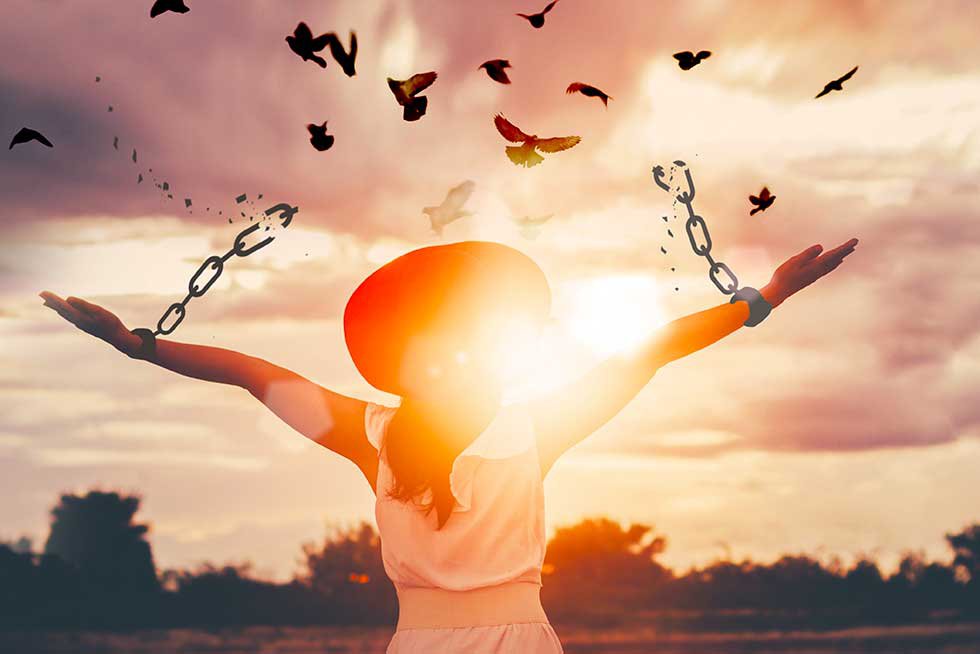
In my sheltered, middle-class life, I don’t know anyone who has been through this kind of horrific trauma. I’ve never personally experienced the tragedy of genocide and war, and I don’t want to pretend I can relate to the story of Immaculee or the millions of people around the world who are facing these horrors every day. One thing we can all relate to though is this question: “How do I forgive someone that has hurt me?” Whether extreme examples like the story shared here, marital infidelity, etc., or the everyday relational struggles we face with family and friends, all of us have been hurt by someone in one way or another. It just seems to be a part of life. Imperfect people living with other imperfect people leads to imperfect relationships, imperfect communication, imperfect decision making, imperfect apologies, and imperfect forgiveness. We can either hang on to the imperfection in bitterness or learn to let go of our anger and extend forgiveness, knowing that we also have been forgiven so much. I want to learn from Immaculee. I want to learn to do myself a favor by not holding onto the baggage of hatred toward others, and instead learn to love, to show mercy, and to live in humility. I know I am guilty of hurting others, both ignorantly and purposefully, and I am deeply in need of forgiveness. I also need to extend that forgiveness to those who need it from me. Jesus put it this way, “Forgive us our trespasses, as we forgive those who trespass against us.” That is when we will experience our own liberation day, being set free from the chains that bind us in fear, division, and unforgiveness.

Let’s learn from the wars and genocides we’ve seen in the past, and from what we see happening around the world today. Love is what the world needs. Love is what your neighbor needs. Love is what your kids need. Let’s be ones who sow love rather than hate, peace rather than war, and forgiveness rather than anger. Love God with all your heart, mind, and strength, and love your neighbor as yourself. Everything else in life hangs on these two things, so this should be our deepest desire and our sharpest focus. Loving God and loving others. This is a process. As I mentioned, none of us does this perfectly. (I know I certainly don’t!!) But if we make this our aim, if we pursue this as our life mission, we might just someday look back on this moment of decision and be able to say, “That was my liberation day”.

In love and peace to all

Asking big questions

There are sacred moments in life that demand our attention. I don’t want to be too busy, too preoccupied to notice the weight and witness the miracle of the moments. It might be the mysterious union of souls in a wedding of loved ones or the wonder and magic of watching the birth of your child. Maybe it’s a moment alone on a mountain top watching the vibrant colors of a sunrise where the beauty of God is on full display and your soul cries out with all of creation. Sometimes it can be in sharing the final breathtaking moment of a spouse, parent, or friend as they exhale their last breath on earth. It’s in these precious minutes where we get fuzzy and imperfect glimpses of eternity. What are we here for? What’s the purpose of life? Where did I come from and where am I going, and what do I want my life to look like in the in-between time. We have this brief opportunity in the unfolding story of humanity to play our part and determine how we play it.

Today I listened to a portion of a filibuster speech by Cory Booker, a senator from New Jersey. He spoke on the senate floor for over 25 hours, challenging us to remember our past and reimagine our future. Love for God, humanity, and America spilled out of him passionately as he told stories of civil rights heroes, founding fathers, and personal accounts that have shaped his faith and views on life. I can’t say this was on the same plane as some of the miraculous moments I spoke of above, but this was undoubtedly a monumental day in history that will be remembered for decades to come. I think someday people will talk about the events of today’s filibuster and recognize the humility and courage displayed to America, calling us to ask a big question: Who are we going to be?

We face these big questions as a nation right now, grappling with issues of domestic economy, foreign policy, immigration reform, and countless other topics that have opinions divided as far as the east is from the west, and everywhere in between. The way we answer these questions can’t be overstated, as they are indicators of the priorities of our hearts, both as a nation and as individuals. When it comes to geopolitical relations, economic strategies, etc., we have to approach these large scale topics with the same litmus test we should use with the people next door. Am I loving my neighbor? Am I considering the welfare and good of others, or am I concerned only with my self? My comfort, my wealth, my safety, my, my, my. Where the people go, so goes the nation. When we are more concerned with our individual rights than the health and safety of others, loving our neighbor has taken a backseat to personal freedom. If lining the pockets with comfort and prosperity are prioritized over caring for the sick and vulnerable, the soul of the nation will wither. All the money in the world will not redeem a nation who abandons the orphans and the widows, the marginalized, the poor, and the oppressed, or as Jesus said, “the least of these”.

We each have to wrestle through these big questions, both individually and collectively. With mutual respect and love for differing opinions, we have to set aside selfish ambition, hateful speech, and arrogance that demands, “Me first”, and choose to prioritize “we” instead of “me”. We, as in all of us; humanity. I’ve quoted this from Mother Teresa before, but I really think it’s revolutionary and profound. The beautiful saint who dedicated her life to caring for others said this, “Where there is no peace, it is because we have forgotten that we belong to each other.” I don’t belong only to myself. You don’t belong only to yourself. This is part of the messy, complicated, and beautiful thing we call community, whether in our homes, neighborhoods, churches, nations, or across the world. We, as human beings, are all in this together.

“Where there is no peace, it is because we have forgotten that we belong to each other.”

Mother Teresa

So I sit here tonight asking myself these big questions of life, and I ask you dear friends to do the same. Who am I going to be to my neighbor? How am I showing up in love for the people in my life? Am I prioritizing my own comfort, blessing, and prosperity, or am I desiring and fighting for the good of others as well? Will I stand for and love the marginalized, the oppressed, the immigrant, and “the least of these”? I pray for my own soul to not be cynical. I pray for our homes and communities to be places of refuge and safety. I pray for our nation to move in humility, kindness, and generosity in the world. And tonight, I pray for Mr. Booker and thank him for the courage to proclaim the love of Christ and love for our nation that have inspired me deeply.

Identification vs Identity

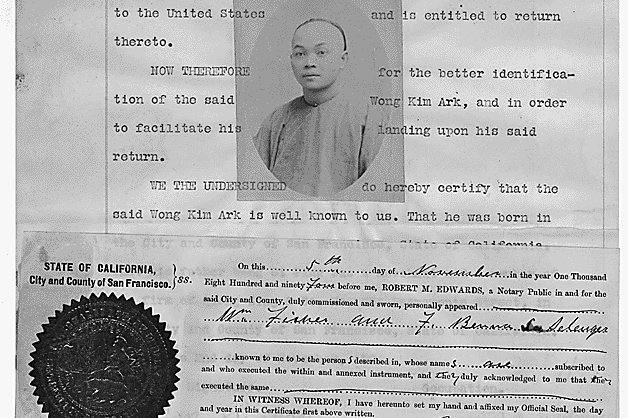
Just a couple days ago marked the anniversary of a landmark ruling by the U.S. Supreme Court in the case of Wong Kim Ark. In 1898, the courts ruled Mr. Ark and all who would come after him, were deemed to be citizens of the United States if they were born here, regardless of their parents’ immigration or citizenship status. After 127 years, that ruling is still being challenged and attempts being made to overturn the 14th amendment to our nation’s constitution. One effect of this is sewing fear into the hearts of everyone walking the streets who doesn’t “look American” enough, being advised to not even leave the house without carrying proper identification and citizenship or immigration papers. It seems that we should be more focused on upholding the constitution rather than trying to overturn the parts of it that we don’t agree with, but I digress. This post isn’t just about birthright citizenship or Supreme Court rulings. There is a deeper reality than what your Passport or Social Security card says about you, and more intimate and real than the description on your driver’s license. Let’s talk about identity.

To adequately consider what identity is, we have to be clear about what it is not. Your identity is not defined by where you were born or live, who you vote for, what you believe, or even what you’ve done. I can’t stress that enough, so let me say it another way. You are not defined by even your worst mistake. What you’ve done is different than who you are. What we do is fickle, shifting like the tides depending on our surroundings, influences, or opportunities. After all the good you’ve done is forgotten and all the bad is either forgiven (or, more likely hidden) from the people around you, when it’s just you left alone in the dark, who is the person that remains? When all opinions and rumors about me are removed from the equation, the sum I am left with is what matters most; my true identity before the God who created me.

So, if more than nationality, more than wealth, more than success or failure, opinions or beliefs, what exactly is identity? In short, I will say this. You and I, in a rainbow of colors and a complete palette of unique qualities and nuance, every last one of us has been created in the image of God (Genesis 1:26). We are sacred beings; spiritual and physical, relational and introspective. Carved out of the dust of the ground and given a soul of creativity, imagination, courage, and empathy, mankind is a miraculous and holy marriage of Heaven and Earth. The daily and the divine all wrapped up in a walking and breathing example of God’s grace. You are a miracle, and so am I. And so is every other human being, cut from the same holy cloth of the divine. Each of us has been created by Love, in the image of Love himself. (1 John 4:7-8) Made to reflect love; love for God and love for others. Therefore, anything we do that is not in love is not an accurate reflection of our identity. This is what we might refer to as “sin”, basically it is missing the mark of perfect love, and chances are I don’t have to try to convince you that you don’t love perfectly. We all blow it sometimes, whether you lose your temper with your kids or spouse, arrogantly judge someone else’s addiction or behavior, or any number of a million different ways that we don’t perfectly love God or our neighbor.

The good news (which in bible language is called the gospel) is that God loved the world so much, every single human being on this blessed planet, that he freely gave himself as a sacrifice to restore a relationship between Heaven and Earth, the dirt and the divine, humanity and divinity. (John 3:16) So my identity is wrapped up in who God says I am: Loved. Forgiven. Sacred. Beautiful. Enough. And so are you, my friend. Only the artist has the right to define his creation, and God who created you has defined you as being worth dying for. And so is every other human, so let’s spend our energy looking for the beautiful and divine in ourselves and each other, rather pointing fingers and fighting about the things that differentiate us from one another.

Who is my neighbor?

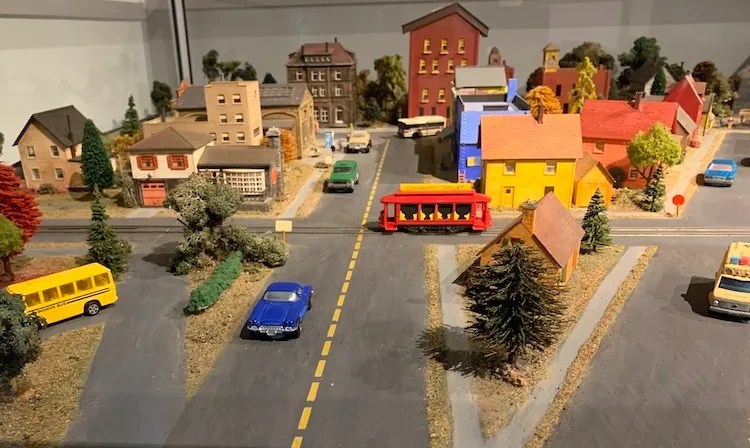
If you were fortunate enough like I was, you grew up with the simple and profound warmth of Mister Rogers’ neighborhood. Slowly and predictably he would slip into his house shoes and signature button up sweater, look straight into the living rooms across America, and drop truth bombs about knowing your identity, loving your neighbor, showing kindness, exercising patience, and extending forgiveness. I think I’ve been longing for that idyllic neighborhood for decades now, like on Cheers where “everybody knows your name” (speaking of shows I grew up on), where community happens as neighbors get to know each other, work through their humanity together, and grow in love and acceptance for all. Wouldn’t that be nice? Can you even imagine living in a world like that today? Maybe that’s exactly what we need to do….imagine something different, something better, a new future.

Perhaps in order to shape a vision for the future, a good place to start is by remembering the past. Looking back, before the foundations of American politics, capitalistic economics, or even the brokenness of our human experience, there was a community that existed in a harmonious vibe that we can learn from. On the sixth day of creation after God spoke the world into existence, he said, “Let US make mankind in OUR image”. Male and Female, both made in the image of God, the community of God that we refer to as the trinity. This God community was complete with all the “masculine” and “feminine” aspects of humanity all perfectly represented in a complete God, working together to call everything into existence. Nothing became something. Nowhere became somewhere. Nobody became somebody, and that’s where we start with our own identity. God calls you somebody. Our faith is birthed through the words of God, “he who created you….he who formed you….Do not fear, for I have redeemed you; I have called you by name; you are mine”. While we are all searching for someplace to belong, God says we belong with him, not as his possession but as his beloved. Let that settle into your soul. Before we move on to trying to love our neighbor, build a community, or create a vision for better future, we have to start here, and let all the other plans and vision and goodness flow from this.

The unfortunate reality here is that we never “get it”. If we wait until our faith is perfect, our lives are flawless, and our society is humming along like the trolley in Mister Rogers’ neighborhood before we take action to love our neighbor individually or fight for systemic justice in our communities, it will never happen. So what are we to do? Well, I don’t have the answer for all the complicated issues we face, but I do think there is a litmus test we can apply as we wrestle through them. First, I remember my own identity and humanity. In humility, I look at these issues through a lens of love knowing that God created earth, the creatures, and every human being that inhabits the planet. If I forget that, my perspective will be off. Secondly, as a created being I prioritize the words of the creator to form his perspective in me. Jesus was asked, “What is the greatest commandment?” His answer was simple. Love God and love people. If my agenda isn’t based in the love of God and love for people, I’m missing the whole point. I’ve heard it said, “if your faith causes you to hate anyone, you’re doing it wrong”. Is there anyone I’m not loving because I think my faith won’t allow me to love “those” people? If so, it’s time to reevaluate.

So then, from this foundation of our identity in God and our mandate to love our neighbor, now we look around and ask, “So, who is my neighbor?”. Think of the people generally disdained by your circle of influence. Who comes to mind? “Those” people are your neighbors. Where there is a great divide in your beliefs, love becomes the bridge of unity. Love conquers all. All, not some, not most. ALL. So I struggle through the reality that it might not always be comfortable or easy, but our highest call from God is to love, and let that love conquer all hate, division, judgement, and pride.

Therefore, love your neighbor; your evangelical, LGBTQ+, liberal, addict, immigrant, nationalistic, BIPOC, ___________ (fill in the blank) neighbor. I don’t know what that looks like for you personally. Honestly, I’m just trying to figure that out for myself as well. So, we show each other some grace and patience. We recognize that each of us is struggling through our own issues that nobody else can see, and we all need each other. As Mother Teresa said, “We belong to each other”. This is community. This is how we make Mister Rogers’ neighborhood our neighborhood. Here is where we find identity and belonging, love and acceptance. Love God with all your heart, mind, and strength, and love your neighbor as yourself. Won’t you be my neighbor?

In the shadows

Deep in the dark, lurking behind me at every scared step, shadows fall and bring painful memories and accusations. Inescapable and unrelenting. My shadow continues to creep up on me every time I think I’ve shaken it off, tapping me on the shoulder to remind me of brokenness and failure. It looks like me, like a reflection in broken glass, cracked and backwards, yet I know deep down it’s me. At least, it’s kind of me. It’s the part of me I’ve tried to leave behind, the portion of my soul that doesn’t feel authentic but in my moments of gut honesty, I know it’s real. Maybe I’m not meant to leave it behind after all, but hold it close in reverence and fear reminding me not to turn back. Even still, I don’t like it.

We all have them. Call it your demon, your addiction, your weakness, your failure, or whatever. It shows up disguised with many different aliases, all equally destructive and terrible, and ……beautiful. Ugh! Even writing that is painful. Can I actually say that my greatest failure is beautiful? It’s a monster. It’s hideous. It’s a noose that gripped my throat and nearly drowned me in the hell of my own depravity. Beautiful? That feels blasphemous and yet, the scars that remain are creating in me a new perspective. Without the wounds I wouldn’t have the scars that tell the story of healing. If I didn’t feel the burn in my lungs as I was being dragged down to the depths, I couldn’t fully appreciate the freshness of life-giving oxygen, at least not in the same way.

Can you relate? Are there things in your past you regret? Did you hurt someone you love? Turn your back on friend? Denied all that was good and true and right in your soul to pursue something destructive in hope that it would somehow soothe or at least distract from your deepest pain or fear? Looking these shadows in the face, we can embrace them because of the lessons we learned from them. Shame wants to hide, pretending these shadows don’t exist. It’s like a blanket that feels comfortable and secure but is slowly suffocating the life out of you. We try to forget and move on and yet, these shadows remain, insidious and more powerful when their hidden.

So I refocus my attention to the shadow that haunts me and I quit trying to run from it. Embracing the beauty of the scars left behind, I shift my eyes off myself and thank God he didn’t give up on me when I had given up on myself. I am thankful for the lessons I learned, even though I had to learn them the hard way. I don’t want to pretend those shadows don’t exist because they drive me further into God’s grace, understanding my own weakness and need. I certainly don’t have this all dialed in. I’m learning, struggling, and growing in this, and slowly beginning to feel the oxygen return to my lungs, to breath in deep, and see the light enter the darkness and reveal the deeper truth about who I am, what I was created for, and how I fit into this crazy world. There is great freedom found here, so if you’re entangled in your shadows, struggling to look honestly at yourself, your past, your struggles, etc, let me encourage you to sit with it. Look at it. Be honest and bring it to God. He’s not afraid of your mess. In fact, that’s exactly why Jesus came into this world, to bring sight to the blind, freedom to captives, and love for the brokenhearted. That’s good news for us all.