Make peace

We fight who we hate. We hate who we fear. We fear who we don’t understand. We don’t understand who we don’t know. We don’t know who we turn away from. And, often times we turn away from anyone or anything that is different than us. Those who look different, speak a different language, practice a different religion, live by a different worldview or set of moral standards. We are quick to label someone based on certain traits or practices that allow us to dehumanize them in our minds, and see them simply as a ______________ (fill in the blank). Perhaps you have been guilty of this like I am. I think we all live with some forms of implicit bias that shape our perspective of people and society. Are there specific groups of people that bring a negative mental picture or bad feelings just thinking about them? As much as I hate to admit it, and hate even more that it’s true, for me the answer is yes.

Where do these biases or negative feelings derive from? Are we born with them? Do we learn from our parents, teachers, friends, or systemic traditions? Does life shape our perspective through our own anecdotal experiences, through pleasure and pain teaching us to expect good from one or bad from another based on some arbitrary standard? I don’t feel qualified or confident to say exactly where these come from, as this has been debated for centuries by people much smarter than I. Or is it “much smarter than me“? (One of my daughters got her Masters degree in English. I’m sure she can tell me which is correct). Anyway, regardless of the cause of these implicit biases that live within the dark corners of our hearts and minds, there is a commonality in how they manifest in our lives. It’s the opposite of love. Not necessarily in outright hatred, spewing evil and slander toward someone or physically attacking (although these things do happen far too often). It’s a bit more subtle, subversive, and I would argue actually more sinister and self-destructive as well.

This is the root of war, the “anti-peace”. When we begin to view people as anything less than a heavenly inspired, divinely created being made in the image of God, we miss the miracle of our diverse humanity. Wow, that was a messy sentence. Maybe my daughter will correct that, too. The fact is, however, that we are all a reflection of the good attributes of God. Love, kindness, generosity, patience, virtue, acceptance, joy, justice…..and the list goes on and on. We find these characteristics of God in the people that he created in his image. So all those people that you or I turn away from are missed opportunities to experience the hidden traits of God that he has tucked away in the heart of every human being. Are they perfect? No, not by a long shot. Neither are you. I know I sure as hell am not even close! But that’s the beauty of God’s love for us. It’s not based on our perfection at all, and our love for each other shouldn’t be either.

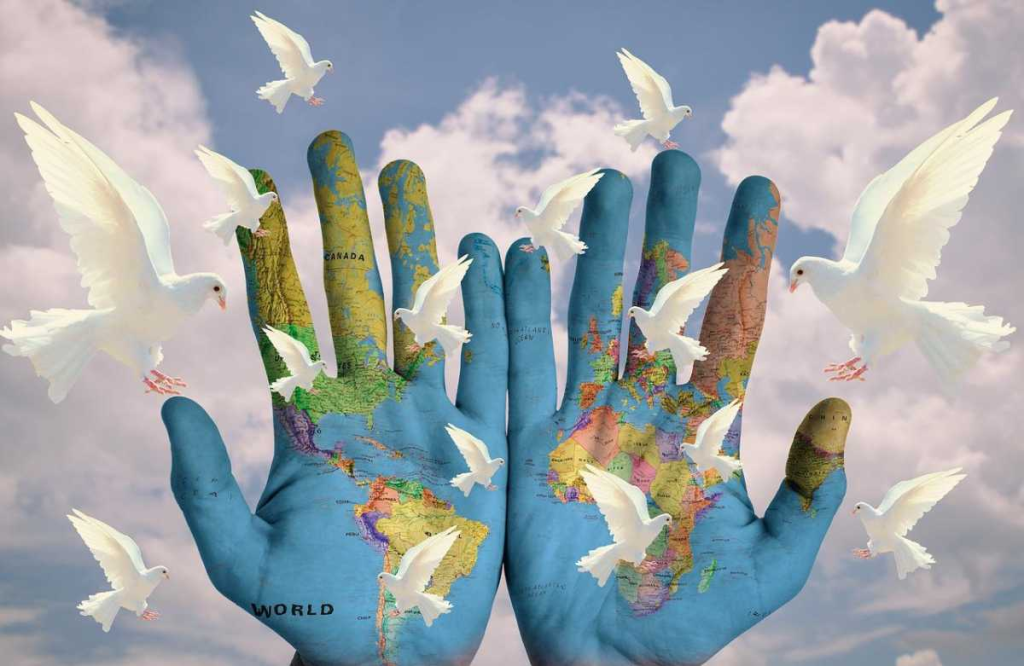
Hacer la paz. Make peace. Each of us has the opportunity to make peace in our own lives. It won’t just happen naturally, but requires intentionality and effort. What you post on your social media has the power to make peace or make war. How you treat the grocery clerk, barista, and your neighbors will flood the world with love, joy, and peace, or can bring anger, bitterness, and hatred. Make peace wherever you go. Be kind. Extend grace and be patient. Honor the diversity of other cultures and beliefs. Don’t view people as a threat to your personal comfort or as a problem to solve, but see them as opportunities to learn from and develop a deeper understanding of God’s love for them and for you. Peace begins with one person at a time, choosing to be a peacemaker in a world at war. Let’s make peace.

Crooked Sticks

A couple months ago, in the dead of winter while we were just hunkering down waiting for the sun and warmth of Spring to come back, the snow started to fall. It was thick, wet, and heavy as it started to pile up on the streets bringing our normal, every day to a screeching halt. It was officially a snow day! Sledding, snowball fights, and hot chocolate replaced the usual classrooms, meetings, and emails for several days. It was fun at first, until it wasn’t. As the beauty of the white snow on the roads turns to a dirty, icy hazard, the magic of the snow day fades as we all just wait for the sun to come out and melt the frozen boundaries that have kept us from normal life. A particular difficulty with an accumulation of snow is the damage it does to the trees that just aren’t used to holding that much weight. One tree in our backyard lost nearly all it’s limbs under the strain, and thankfully just missed our house as several large branches came crashing down. Just one more checkmark on my list of reasons we should be living on a tropical island somewhere, but that’s a whole other issue.

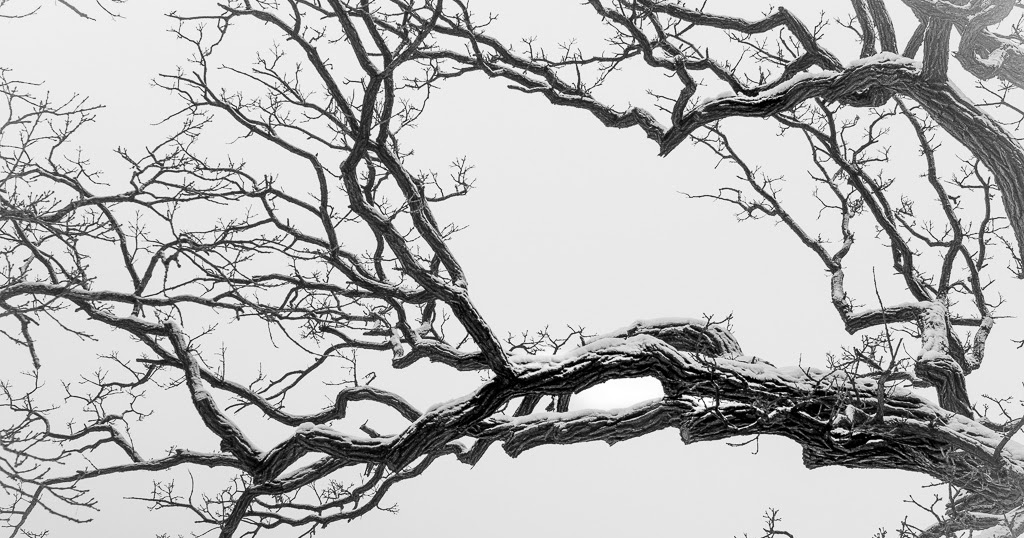
As the sun poked itself out through cracks in the gray skies, the snow eventually disappeared enough that I could go out back and start the clean up. I’ve spent hours out there cutting limbs and still have a mess of twisted up branches that need to be separated and cut just so I can haul them away. It’s interesting looking at my piles of branches, and I notice this to be true in nature…..nothing is straight. Not one branch or limb is perfectly straight. Walking the trails just outside of town, I’m surrounded by literally thousands of examples of the warp of the natural world. Winding streams, jagged mountains, and crooked sticks are everywhere. Looking deeper, I notice that both myself and every other human being I come across fit into this same category. We are twisted. We are broken and jagged. We are crooked.

That doesn’t feel very good to admit. If I’m honest with myself and with you, I’ll admit that I don’t really want to view myself as crooked. Typically in my life, and perhaps you are the same, I try to show my best self to the world. I want people to see the good in me and be blind to the bad. I want people to think I’m a good guy, and to see honesty and integrity in me. Well, what do you do when the façade is exposed and the world gets a glimpse behind your mask and realizes you’re just another broken, crooked stick? Is that it? Is that the new identity you carry for the rest of your days? In a recent conversation with my wife, I implied that in some ways that the failures of my own past define what I can and should do in the future. Her response was both direct and profound. “That’s a lie,” she said plainly. And you know what, she was right. Martin Luther once said that God uses crooked sticks to draw straight lines. The truth is this: We’re all a little bit crooked. In our own natural state, we are flawed and twisted up versions of what we were intended to be. And yet, God somehow chooses to use crooked sticks. And we, recognizing our own failures and twisted up nature, are pulled into humility when we see God use the crooked limbs of our life to draw perfectly straight lines of grace and unconditional love. He doesn’t love us because we decided to be perfect little Christians that don’t eff up anymore. While we were yet sinners, before we gave two pence about God at all, he gave himself on our behalf.

Remembering this, the simple and profound truth that it never was and never will be my own “straightness” that qualifies me to be either loved or used by God, this is what brings humility and gratefulness to my soul. It’s in this place that I acknowledge my own brokenness, my crooked and selfish heart, and begin to scratch the surface of understanding the love of God who runs toward the brokenhearted, embraces the mud-soaked son who returns home hoping to just be a servant, and welcomes him as a son. I don’t care where you’ve been or what you’ve done. It doesn’t matter how many times you’ve fallen down or walked away. Don’t live in shame of your crookedness, but know that as you surrender it to God he can and will bring beauty from your ashes. He will begin to use the brokenness of your own story to draw straight lines to show you that, in his hands, you are perfect. You are redeemed. You aren’t broken after all, but it’s your very crookedness that demonstrates God’s unconditional love for you.

The Art of Welcome

My daughter once told me in regards to the church, “That which you love, you hold to account”. Therefore, it is in great and deep love for the church, that is, the people, the followers, the disciples, the broken and redeemed whose faith and trust is in Jesus that I write this today. Myself included, as I am convicted in my own heart that I have tried to fit the enormity of God’s love for the world into a small and convenient box of my own level of comfort. The church is us; we the people who have believed and accepted the forgiveness of Christ and are called to live upside down and backwards to everything we learned before. Where there was pride, we pray for humility. Where there was greed, we develop a heart and practice of generosity. We are called to be servants, to love God and neighbor, to forgive rather than seek revenge or fight for our own rights, and instead of sowing division and exclusivity we practice the beautiful and divine art of welcome.

“The Lord entrusts to the Church’s motherly love every person forced to leave their homeland in search of a better future …”

Easter is a day for us to celebrate resurrection; the incredible, miraculous event of Jesus rising. There is no resurrection with a death that precedes it, and this year we are reminded of that reality as the world mourns the passing of Pope Francis. With all the human flaws within the ecumenical church as a whole, there was something beautiful and simple in the life of this man. Beyond all the formal rites and rituals, the political power and wealth that distract from the message, Pope Francis was a Pope for the poor, for the oppressed, for the brokenhearted, and for the immigrant. In a message he gave in 2018 for the World Day of Migrants and Refugees, Francis said, “The Lord entrusts to the Church’s motherly love every person forced to leave their homeland in search of a better future….” This is echoed in the words of scripture that tell us time and time again to welcome the immigrant (foreigner, stranger, etc) and to care for them like a brother. “Every person forced to leave their homeland in search of a better future.” Immigration policies are in place for governments to manage all the logistics of that, but our job, as men and women whose greatest commands are to love God and love people, is to have a heart of welcome that manifests itself into action on their behalf.

“In this regard, I wish to reaffirm that ‘our shared response may be articulated by four verbs: to welcome, to protect, to promote, and to integrate.'”

Pope Francis went on to explain how this responsibility of entrustment should look. It’s not enough for us to simply stop hating on immigrants; to stop trash-talking, stereotyping, and dehumanizing them. Every aspect of faith requires action, and in this spirit Francis continued, “In this regard, I wish to reaffirm that ‘our shared response may be articulated by four verbs: to welcome, to protect, to promote, and to integrate.'” There is a biblical command for “Mishpat”, or justice, that we are to extend, specifically to the orphan, the widow, the poor, and the immigrant. It doesn’t stop there as we are to “do justice, love mercy, and walk humbly” at all times, but God’s heart of compassion and concern for these specific vulnerable groups is clear and it’s not something we can ignore.

With all the fear-based rhetoric coming from both sides of the political aisle, our role, if you are one who would consider yourself to be a believer and follower of Jesus, is simply this: to Love. Love the Lord your God with all your heart, mind, and strength, and love your neighbor as yourself. Let’s not get caught up in the crossfire of hate-speech and division, but may we be ones who welcome, protect, promote, and integrate. This is the message of the gospel. It is not exclusive. It is not a respecter of race, nationality, gender, political party, or anything else that we tend to divide over. Immigration papers are not a prerequisite to the good news of God’s love applying to every living, breathing individual on this planet. In the spirit of Pope Francis, and even more in the spirit of Jesus who loved us and gave himself as a ransom for all, may we learn to paint masterpieces in the beautiful art of Welcome.

Welcome Wall

between two worlds I stand
frozen, suspended
a refugee from my homeland
the childhood dreams have ended
is there no place for me?
no country, no home
where I can just be?
will we ever be free?
guns and tyranny pushed us out
war violence
i asked what it was about
they just forced our silence
under a full moon we ran
fear carried us away
we didn’t have a plan
or even know where we would stay
or if we’d die today
days of walking in hope
starving, crying
my family can hardly cope
it might be better dying
i’m not sure anymore
will we ever make it?
what did we leave our home for?
just so the oppressors could take it?
freedom lies just feet away
opportunity, safety, hope, life
a home for my children to live and play
now, how to get over this wall?

*Important note*
This poem is written from the fictional perspective of a refugee, forced to flee his country and seek safety for himself and his family. This is NOT my story or my experience, but a portrayal of the fear and struggle that is common throughout the world. I wrote this not to appropriate anyone else's story, but to respectfully bring awareness to the plight of countless human beings facing violence and oppression in their home country.

Masterpieces of imperfection

Beauty and value are in the eye of the beholder. This is obviously subjective, but when the beholder is also the creator, they have the exclusive right to determine what the true value of something is. You and I, being intricately knit together by our creator, carry an inherent worth that is far beyond what we realize. After the splendor of stars and the heavens burst into the sky and the hidden depths of the oceans came to life out of God’s vivid imagination; when elephants and aardvarks and puppies and everything else were spoken into existence, God’s pièce de résistance arrived on the sixth day of his creative masterpiece. “So God created man in his own image,……male and female he created them.” From humble beginnings tending a garden, Adam and Eve had within them something powerful and beautiful that nothing else did. They were created in God’s image, blessed by Him, and given a responsibility to tend the earth in respect and humility. That is our heritage. Every last one of us regardless of any other factor retains the intrinsic and objective value of being created in the image of God, beautifully and wonderfully made. You are a work of art, perfectly formed and God has called you good. Even more miraculous is that I am, too! That hasn’t always been easy for me to believe, but I’ve come to learn that what God says about me is truer even than what I say about myself.

I probably don’t have to do much convincing for you to admit you aren’t perfect. Have you ever lied, broken rules, stole a cookie, exceeded the speed limit, gossiped about a friend, or been envious and discontent? If you say no, you’re actually guilty of lying to yourself and therefore you’ve lied. That’s kind a nasty little cycle, isn’t it? We’ve all “sinned”, which is to say we have missed the mark of perfection in life. Perhaps some more than others, but “perfect” doesn’t really have degrees of relativism. Something is either perfect or imperfect. Almost perfect isn’t perfect. Now, as we look around the world, we can sometimes start to compare our imperfection with someone else’s imperfection and decide we are less imperfect than they are, and ascribe a higher status or value to ourselves based on our perceived level of imperfection, but make no mistake; you are imperfect and so am I.

So how do we reconcile a standard of being absolutely perfect with what we know of our own imperfection, weakness, addiction, arrogance, or a million other ways our humanity shows up on a daily basis? The answer is that we don’t. There is simply nothing that you or I can do to reconcile ourselves, but it has been done on our behalf. That’s the good news about Jesus. It has nothing to do with being good enough, or should I say “less imperfect” than anyone else. God so loved you that he gave his son, Jesus, so if you believe in him you are declared to be perfect apart from anything you’ve done. It’s the great switcheroo. God, who is perfect, died for us. We, who are imperfect, are given life. Simply accepting that, believing that, is how we have been reconciled to God. I just have to ask myself, “How am I going to respond to that?”

Do justice. Love mercy. Walk humbly. This is what we’re told that the LORD requires. Not sacrifices, offerings, payment, or labor. Love mercy by showing kindness to others regardless of if you think they deserve it or not. Walk humbly with God, knowing that you, too, are imperfect and yet have been loved unconditionally. And, do justice by caring for each other. Social justice is just that…..Doing justice towards society, for every other human being because they are created in the image of God, worthy to be loved, honored, and respected. This Easter season, as we celebrate the perfection of God that invaded the brokenness of our world in order to bring life and salvation to us all, let’s be quick to extend that same justice, mercy, and humility to all those around us as well.